
19 August 2026 · Blog
Office Christmas Party Entertainment That Everyone Joins
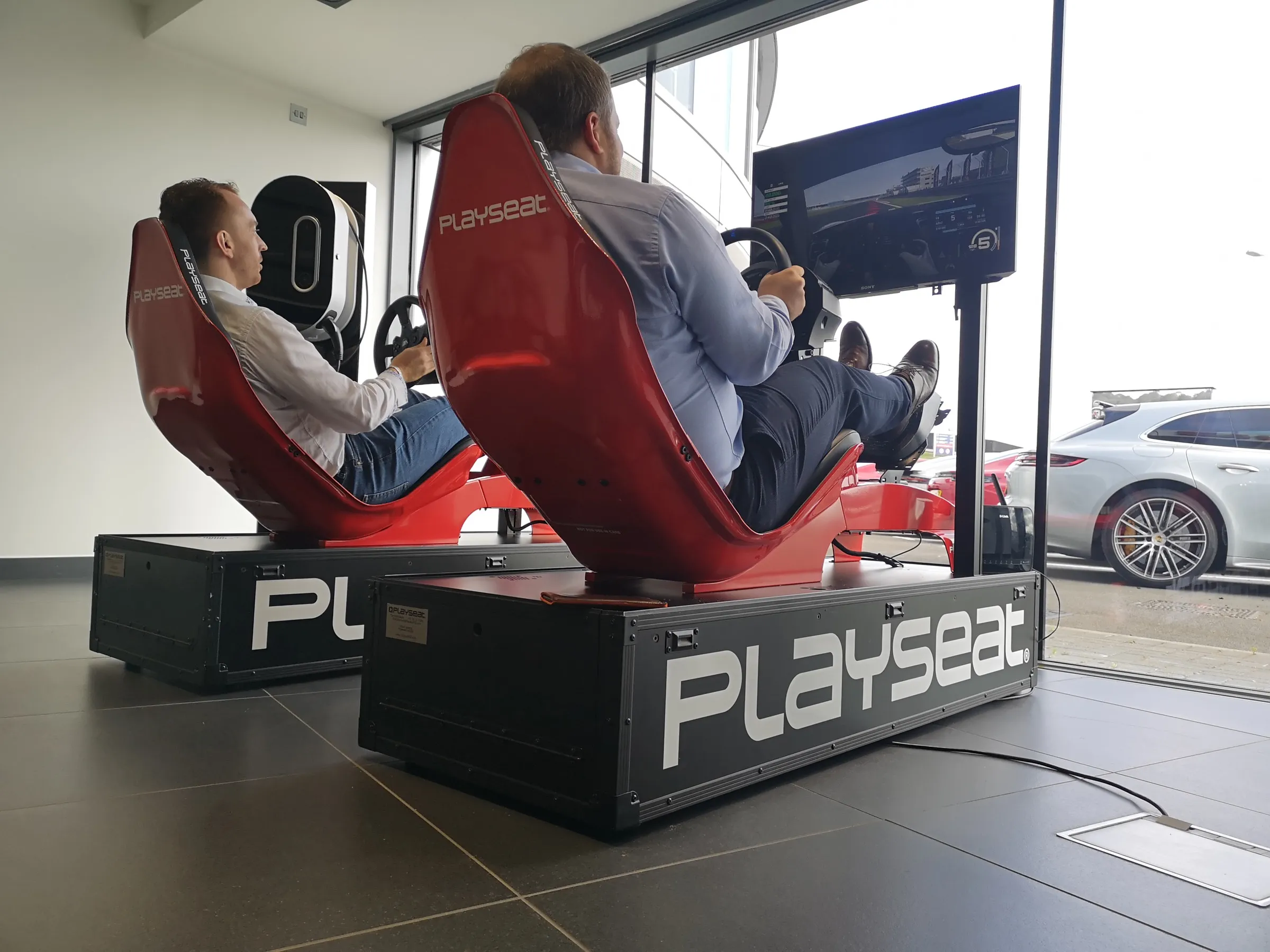
Organising the office Christmas party is a different job from organising a client event. Rather than impressing anyone, you’re trying to give a group of people who see each other every day, or these days often don’t, one evening they actually enjoy together.
That changes what the entertainment has to do. This is a guide to office Christmas party entertainment written from the supplier side, after a lot of Decembers running racing simulators at work parties. It covers why the office party is a harder brief than it looks, what to look for, and what it costs.
What makes an office party different
A client party has one job: make guests feel looked after. An office party has about five, and they pull against each other.
Your guest list is really a set of groups rather than a crowd. Finance and sales each keep to their own tables, and people who joined in the last year don’t know anyone outside their own desk. Hybrid working has sharpened this: plenty of companies now have colleagues who have genuinely never met in person, and the Christmas party is the one night that could fix it.
Then there’s the spread of people, from those in their first job to those who’ve been there twenty years. Some drink and some don’t, most won’t go near the dance floor, and a few will leave at nine whatever you book. Entertainment that only works for the confident half of the room leaves the other half standing near the buffet.
Entertainment that mixes departments
The most useful thing office party entertainment can do is get people talking to colleagues they don’t normally talk to. Seating plans try to do this and mostly fail, because everyone drifts back to their own group as soon as the plates are cleared.
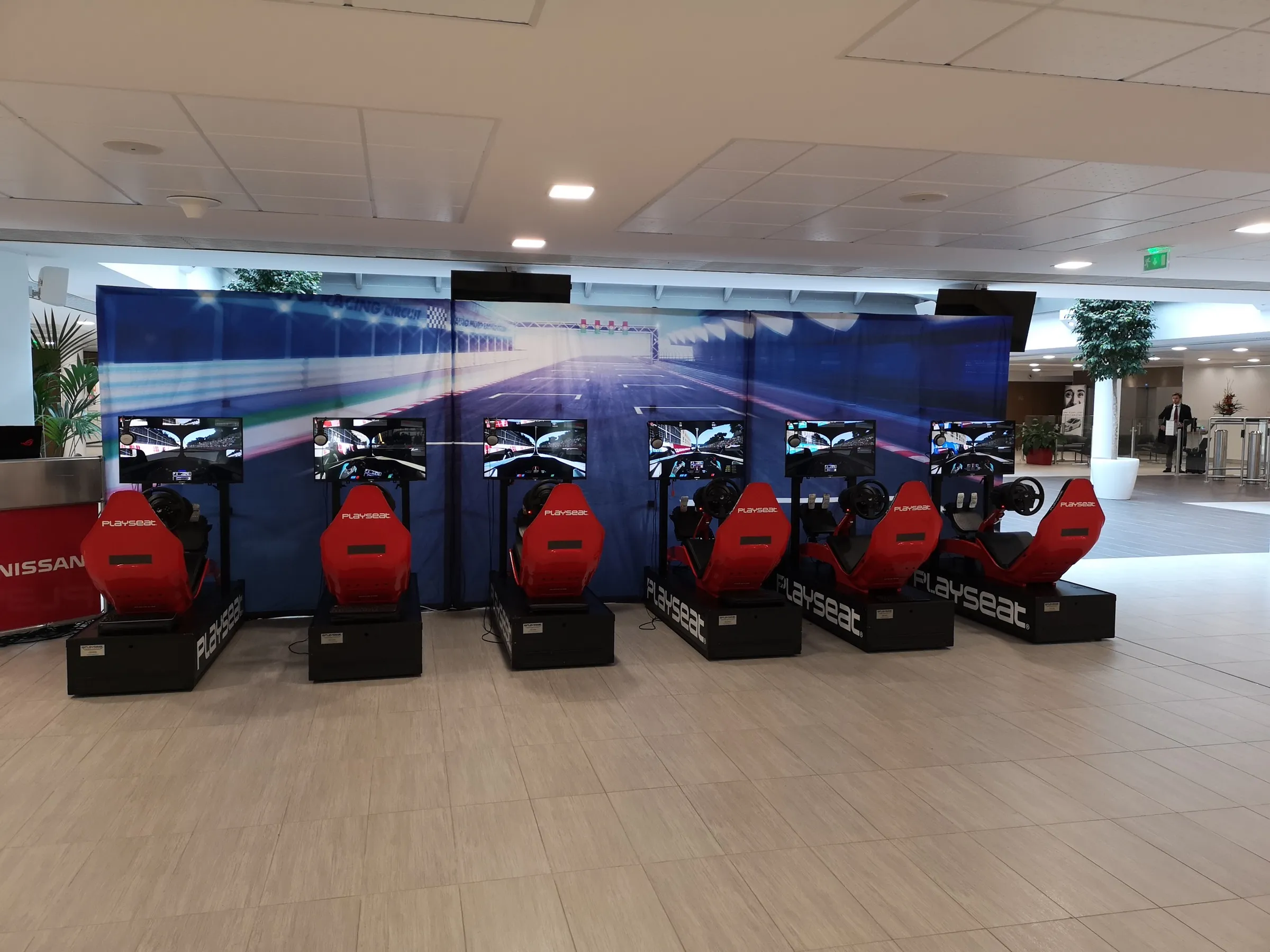
A shared competition works differently. Put a line-up of racing simulators in the room, all running the same circuit with one live leaderboard up on a screen, and people start checking where they’ve come.
Before long the warehouse supervisor turns out to be quicker than the sales director, someone from marketing takes top spot at half nine and spends the rest of the night defending it, and the conversations are about lap times instead of work. The leaderboard does the mixing, so nobody has to be introduced to anyone.
The people who usually opt out
Every office has a group who quietly sit the party out: the non-drinkers, the new starters, the people who find a dance floor excruciating and the ones who only came because it looked rude not to.
That group is the real test of what you book, and racing works for them because the barrier is almost nothing. You sit down, the seat and pedals adjust to you, and one of our team talks you through it in about thirty seconds. There’s no skill you’re supposed to have already, and no audience judging you, because everyone in the room is watching the screen.
It also works in short goes, because a quick qualifying run, where you’re just setting your fastest lap, takes a couple of minutes. Someone who wants one turn and a quiet chat afterwards gets exactly that, and anyone who wants to race all night can do that too.
It has to fit round food and speeches
Office parties rarely run in one clean block. There are arrival drinks, then food, then the awards or the thank-you speech, then the stretch where the evening either takes off or fades out.
Entertainment with a fixed slot has to be scheduled into that, and if the food runs late it collides. A band or a comedian needs the room’s attention at a particular moment, whereas racing runs across the whole evening and guests come and go from it.
During arrival drinks it gives people something to do, and in the flat patch after the speeches it fills the room. Our team runs the whole thing, so it isn’t another job on your night.
On short stints we get roughly 8 to 10 drivers through each simulator per hour. That’s worth checking against your headcount and against how long your entertainment window really is once food and speeches come out of it.
The hotel function room
Most office Christmas parties happen in a hotel suite or a function room, and those rooms vary a lot more than the brochure suggests. It’s worth confirming three things early: get-in and get-out times, the route from the loading point to the room, and how many power sockets you have.
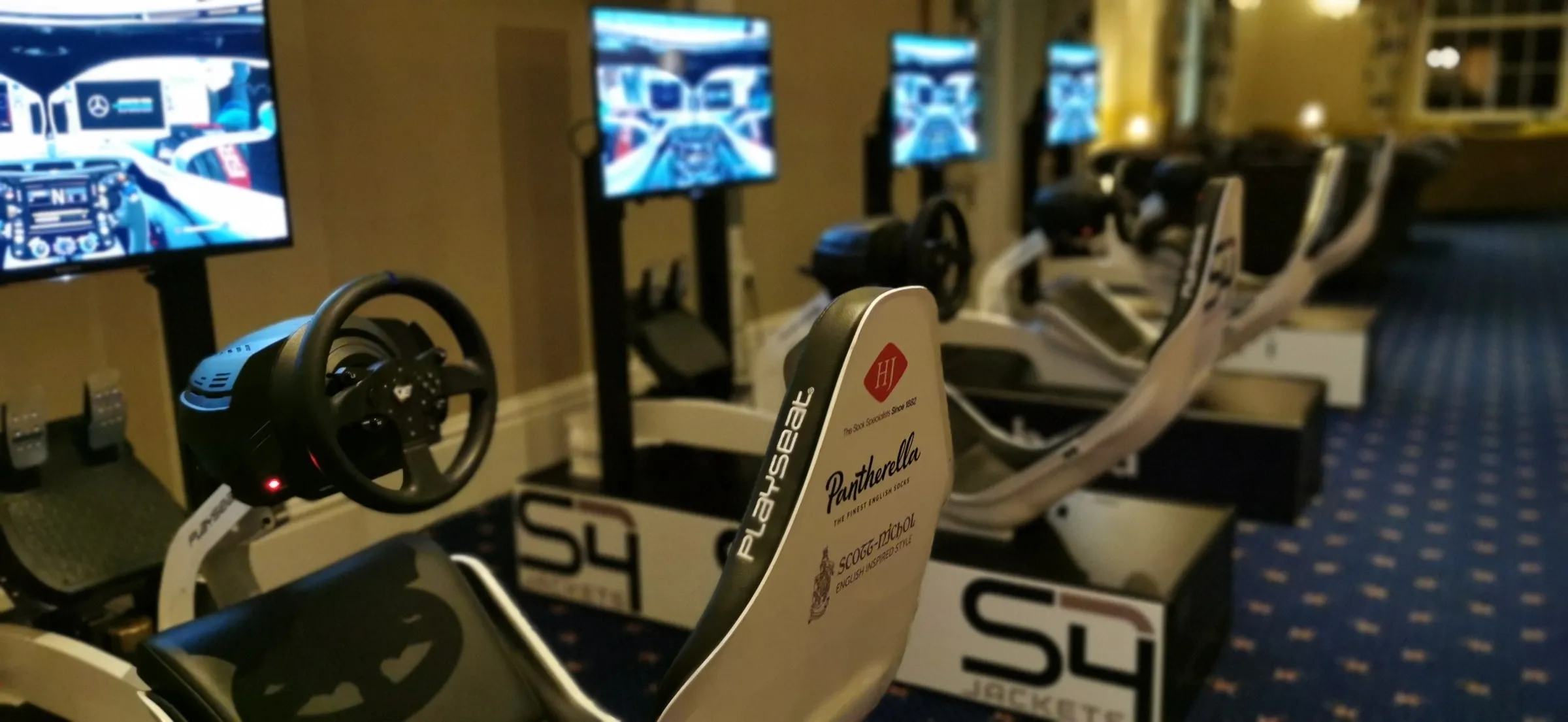
A standard 13A socket runs up to two of our simulators, and setup takes around two hours before your guests arrive. Our simulator hire FAQs cover space, power and timings in more detail.
Budget and sign-off
Office party budgets usually work per head, and usually need signing off by someone who wasn’t in the planning conversation. Entertainment tends to be the line that gets squeezed last, after the venue and the catering, so it helps to have a real number early rather than a range.
F1-style simulator hire starts at £790 per day. Two simulators, three, six and the multi-day rates are all published on our racing simulator hire prices page, so you can build the number yourself before you ask anyone to approve it.
Delivery is included within 100 miles of our Silverstone base. Our team runs the experience as standard, and it isn’t a line you can take off a quote: they build the kit, run the racing all evening and take it away afterwards. For the bigger nights we can put up to 16 F1-style simulators plus 2 GT simulators in one room, all racing head to head on a single leaderboard.
When to book
December Thursdays and Fridays go first, and most of them are gone by the end of October. If your date is already fixed, checking availability costs nothing and takes a minute. The full booking timeline is in our guide to Christmas party entertainment hire.
Get a quote
Tell us your date, your venue and roughly how many people are coming, and we’ll come back with a quote within 24 hours, Monday to Friday. Call 01327 856155, or see what a party set-up looks like on our Christmas party simulator hire page.